
Waste as Feedstock
Why it matters
Ash, slag and demolition rubble hold real value. Reusing them cuts landfill waste and lowers the carbon of binders and aggregates.


Construction and industrial activity generates around 3.5 billion tons of waste every year, while the world spends $1.48 trillion on construction materials. Much of that waste could become the feedstock for better materials.
We built Better Materials so manufacturers do not have to choose between performance, cost and carbon. Our goal is to help turn waste streams into high-performance construction materials, using AI to reduce expensive trial and error and physical testing to prove what works.
How? By making waste-derived materials practical for real manufacturing.
Why it matters
Ash, slag and demolition rubble hold real value. Reusing them cuts landfill waste and lowers the carbon of binders and aggregates.

How we develop
Machine learning explores far more formulations than a lab could test, and targeted experiments confirm what works before production.

Who we design for
Every recommendation is designed around your equipment, feedstock variability and quality standards, together with your team.
Waste generated annually
Construction and industrial waste represents a major material development opportunity.
Global materials market
Estimated opportunity across construction materials worldwide.
U.S. materials opportunity
Estimated U.S. construction material market size.
Initial market
Estimated urban construction materials opportunity for manufacturers.

Early access
Early access to the platform, formulation recommendations for your feedstocks and support planning targeted experiments.

Shared learning
The feedstock and production data you are comfortable sharing, regular feedback and access to run trials where practical.
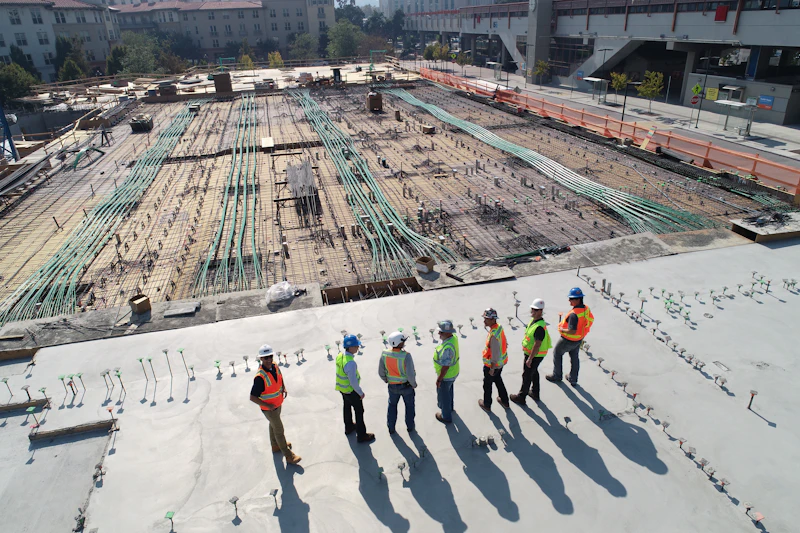
Step by step
A discovery call, a feedstock review with first recommendations, then targeted experiments with results shared at every stage.
Tell us about your feedstocks, equipment and goals. We will be in touch to discuss next steps.